
Description
Epimedium enhancing vitality, strengthening the body, and particularly for improving
reproductive function, aligns well with common health challenges encountered in animal
breeding programs, geriatric animal care, and conditions involving general debility.
Epimedium’s traditional role in tonifying Kidney Yang and nourishing Kidney Jing aligns
strikingly well with its scientifically observed effects on sex hormone regulation (such as
testosterone, luteinizing hormone, and follicle-stimulating hormone), reproductive organ
function, and bone mineral density. For instance, TCVM describes Kidney Yang deficiency
with symptoms like diminished libido, impotence, a sensation of coldness, and general
weakness
The Traditional Chinese Veterinary Medicine indications :- Sexual Dysfunction : Addressing issues such as impotence, lack of libido, infertility in both
male and female animals, and poor semen quality.- Musculoskeletal Issues : Used for conditions like weak back and knees, chronic joint pain,
and osteoarthritis, particularly in older animal or those with Kidney Yang deficiency patterns.- General Debility and Geriatric Support : Employed to combat fatigue, strengthen the body,
prevent disease, and enhance overall vitality, especially in aging or constitutionally weak
animal.- Kidney Jin deficiency and Kidney Yang deficiency which can manifest as infertility, low
sperm count or motility, anestrus (lack of heat cycles), irregular estrus, or a pale, swollen
tongue and a weak, deep pulse.- Cryptorchidism : In young male dogs or cats with undescended testicles (cryptorchidism),
aiming to tonify Kidney Yang and thereby encourage proper testicular descent into the
scrotum.
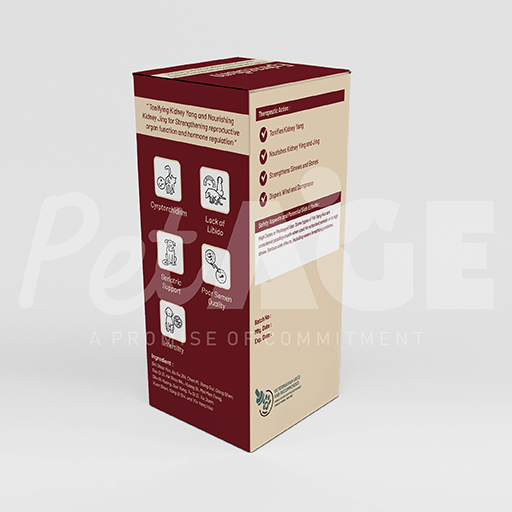
Therapeutic Action of Yin Yang Huo :- Tonifies Kidney Yang : This is a cornerstone action of the herb. in TCVM, Kidney Yang is
associated with the body’s vital warmth, metabolic activity, developmental processes, and
particularly reproductive power and libido.- Nourishes Kidney Ying and Jing : While primarily a Yang Tonic, its role in nourishing Kidney
Yin and Jing. Jing is considered the fundamental life essence, governing hereditary, growth,
development, and reproduction.
– Strengthens Sinews and Bones- Dispels Wind and Dampness
Active Ingredient :
Bai Shao Yao, Bu Gu Zhi, Chen Pi, Dang Gui, Dang Shen, Gou Qi Zi,
He Shou Wu, Huang Qi, Mai Men Dong, Shu Di Huang, Suo Yang, Tu Si Zi, Xu Duan,
Xuan Shen, Yang Qi Shi, and Yin Yang Huo.
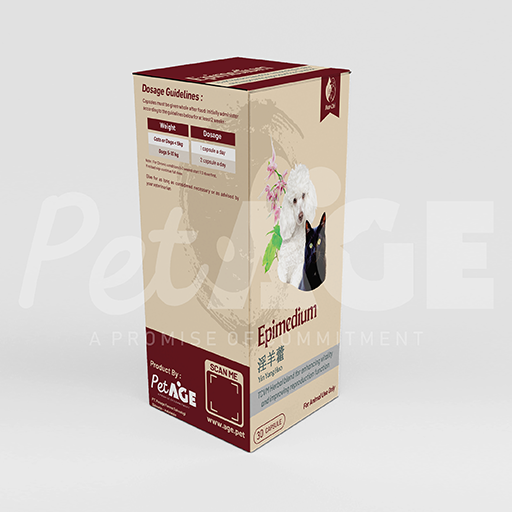
Dosage Guidelines :
Cats or Dogs < 5kg : 1 capsule a day
Dogs 5-10 kg : 2 capsule a day
*Chronic conditions (>3 weeks) start 1/2 dose first, 2 days no sign gastrointestinal problem,
give full doses
2-3 weeks before breeding start to give this herbs formula
For puppy or kitten who have bad genetics can use 1/2 doses for long term
○Minor Side Effects: Abdominal discomfort and nausea
○Allergic Reactions: Rare cases of skin reactions, including hypersensitivity and allergic
dermatitis
Potential Side Effects :
High Doses or Prolonged Use: Some types of Yin Yang Huo are considered possibly unsafe
when used for extended periods or in high doses. Serious side effects, including severe
breathing problems.
Contraindication :
Pregnancy and Lactation:
○Inhuman medicine, Epimedium is generally considered possibly unsafe during pregnancy
due to potential harm to the developing fetus, and its use during breastfeeding is not
recommended due to insufficient safety information.
○Inveterinary medicine, there is a general lack of safety data for most analgesics and
herbal supplements in pregnant or lactating animals, leading to a cautious approach.
Commercial veterinary herbal products containing Epimedium often carry a warning stating
that “safe use in pregnant animals or animals intended for breeding has not been proven”.
●Hormone-Sensitive Cancers and Conditions: Due to its phytoestrogenic activity and
potential to increase estrogen levels, Epimedium might exacerbate estrogen-sensitive
conditions, such as certain types of mammary or uterine cancer.
●Surgery: Given its potential effects on blood clotting, it is prudent to discontinue
Epimedium use at least two weeks prior to any scheduled surgical procedure to minimize the
risk of excessive bleeding (this is a common human recommendation that should be
considered for animals).


Reviews
There are no reviews yet.